

Collectors Crossroads
American Revolutionary War Brunswick Officer Spontoon with “PARTA TUERI” Motto | Museum Grade Relic!
American Revolutionary War Brunswick Officer Spontoon with “PARTA TUERI” Motto | Museum Grade Relic!
Couldn't load pickup availability
Share
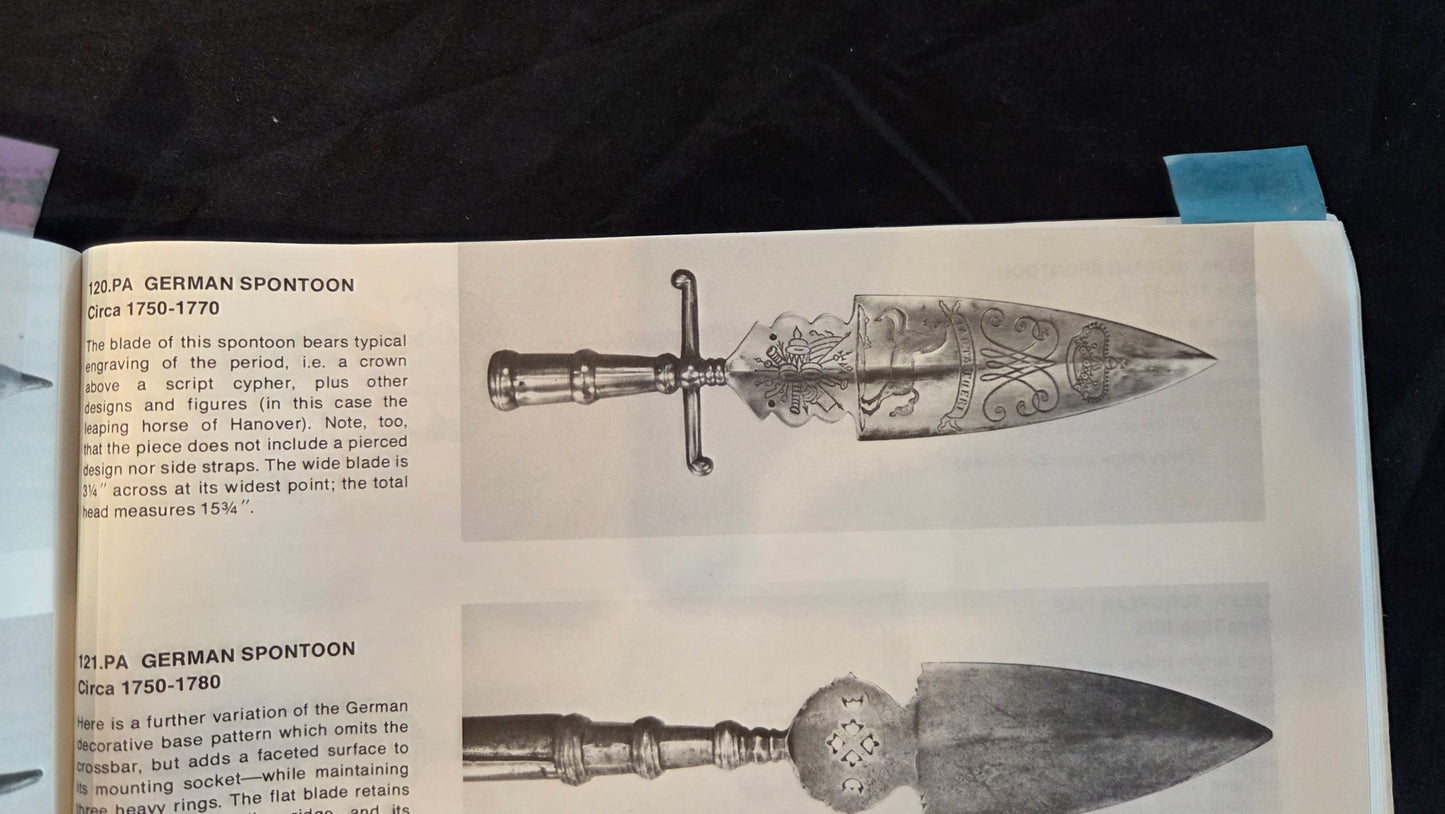
This American Revolutionary War era 18th-century Brunswick commissioned officer’s spontoon is an exceptional and highly decorated polearm retaining its original period wooden shaft and rare metal butt ring. The steel head is etched with the distinctive Leaping Horse of Brunswick emblem, cypher and crown, military motifs including drums, halberds, and flags, and the Latin inscription “PARTA TUERI” on both sides of the blade. The motto translates to “Defend what you have won” or “To maintain acquired possessions.” The spontoon was a weapon of rank and command, typically carried by commissioned officers and sergeants for authority, signaling, and identification rather than ordinary infantry combat. The center of the blade shows war-use damage, having split approximately halfway through and later repaired, an important condition note that also speaks to the piece’s field history.
The estimated period of construction for this German Spontoon is C. 1750-1770 – right before being shipped to the Americas to serve the Crown as mercenaries!
For Reference, see Swords & Blades of the American Revolution by George C. Neumann Pg. 221 120.PA
Spontoons were among the most recognizable symbols of 18th-century military authority. Officers and senior non-commissioned officers used them to signal commands, maintain formation, mark rank, and protect colors or key positions. The Brunswick connection is especially important in the American Revolutionary War context, as German troops from Brunswick and other German states served alongside British forces in North America. The motto “PARTA TUERI” is particularly evocative when viewed through the lens of the Revolutionary War, as it may be interpreted as a British or allied statement of maintaining possession of lands already won. The imagery of drums, flags, halberds, cypher, crown, and the Brunswick horse places this object squarely within the martial and symbolic language of European command during the age of the American Revolution.
There is also a fascinating alternate interpretive possibility connected to the Horn family, whose motto and Germanic origins have been associated with Berlin and whose branches were present in colonial America before and during the Revolution. The Horn family was highly decentralized, with members appearing in New York, New Netherlands, Maryland, Pennsylvania, Philadelphia, and other colonial regions from the 17th into the 18th century. Some branches supported the American rebellion, while others remained Loyalist or served in German units aligned with the British Crown, including Hessian service. Similar officer spontoons from this era are represented in major museum collections, including The Metropolitan Museum of Art, underscoring the significance of this historic form. With the original lineage of this remarkable spontoon now lost to time, the next owner may decide which side of the conflict this weapon most likely served. In either interpretation, the Leaping Horse of Brunswick, royal and military motifs, Latin motto, original shaft, rare butt ring, repaired battle damage, and museum-comparable form make this a museum-quality Revolutionary War era polearm and a potential centerpiece for any advanced collection of 18th-century arms, German auxiliary material, British-allied Revolutionary War artifacts, or officer weapons of rank.
Condition: Center of blade split approximately halfway through and later repaired.
Why Buy From Us?
- 5-star rated store trusted by collectors
- Fast, reliable shipping
- Expertly handled collectibles, always packed with care